
Arab-German Young Academy of Sciences and Humanities (AGYA)
Booth number: 5A05
agya.info
About us
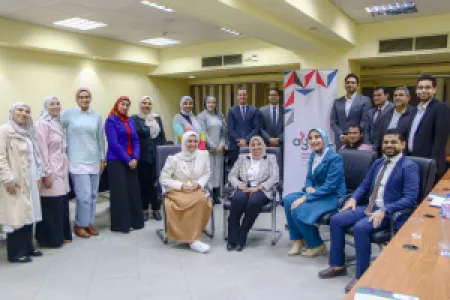
The Arab-German Young Academy of Sciences and Humanities (AGYA) brings together excellent Arab and German scholars to address common challenges and develop solutions through sustainable research cooperation.
AGYA promotes early-career scholars (3–10 years after PhD) from 22 countries in the Arab world and Germany. The academy members implement joint research projects and initiatives at the interface of science and society with a focus on education, innovation, and science policy.
Founded in 2013, AGYA is the first bilateral young academy worldwide. The academy’s members and its alumni/alumnae are involved in building a community of trust that creates interregional competence networks to inspire a new kind of research practice on equal terms.
AGYA seeks to give a voice to excellent scholars from the Arab world and Germany, facilitating the emergence of fresh and pioneering Arab-German perspectives and strengthening new forms of North-South-South cooperation.
_AGYA_Sandra-Steiß-thumb.webp)
_AGYA_Abdulsatar-Sultan-thumb.webp)
_Antje-Engelmann-thumb.webp)
_AGYA_Ali-Elgayar-thumb.webp)
_University-of-Sharjah-thumb.webp)
Address
Jaegerstrasse 22/23
10117 Berlin
Germany
E-mail: agya@bbaw.de
Phone: +49 30 20370670
Internet: agya.info
101 Kasr Al-Aini Str.
11516 Cairo
Egypt
E-mail: agya@asrt.sci.eg
Phone: +201 225 643263
Internet: www.agya.info
Jägerstrasse 22-23
10117 Berlin
Germany
E-mail: masetto.bonitz@bbaw.de
Phone: +49 30 20370670
Internet: agya.info/
Contact person:
Prof. Dr. Verena Lepper
AGYA Principal Investigator
E-mail: agya@bbaw.de
Products & Services
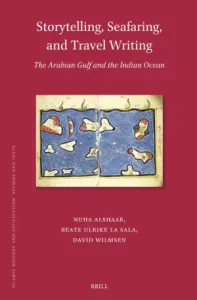
Beate La Sala, Nuha Al-Shaar (eds.):
Storytelling, Seafaring, and Travel Writing: The Arabian Gulf and the Indian Ocean, 2026.
Nadia Bahra, Lando Kirchmair, Matthias Pasdzierny, Albrecht Wiedmann (eds.):
Access to Waxes – The Collections of the Berlin Phonogramm-Archiv, 2025.
Lilia Makhloufi:
Housing, Heritage and Urbanisation in the Middle East and North Africa, 2025.
Matthias Pasdzierny:
Inside the Studio Spaces of Electronic Music Production. Berlin/Cairo, 2025.
Verena Lepper, Ghada Mohamed, Tarek Tawfik (eds.):
Elephantine. Island of the Millennia, 2024.
Nuha Al-Shaar:
Muslim Sicily: Encounters and Legacy, 2024.
Kirill Dmitriev (ed.):
Al-Sakhāwī, a Biographer from Mamlūk Cairo and His Dictionary of Women, 2024.
Suhair Sunoqrot and Sereena Hamad:
Salma's Adventures: Salma Rides the Ultrasound Waves [in Arabic], 2024.
Hanan Badr, Nahed Samour (eds.):
Arab Berlin: Dynamics of Transformation, 2023.
Nuha Al-Shaar, Beate Ulrike La Sala, Jenny Oesterle, Barbara Winckler (eds.):
The Humanities in the 21st Century: Perspectives from the Arab World and Germany in Arabic], 2022.
Ikram Hili, Matthias Pasdzierny (eds.):
Brigitte Schiffer: Letters from Cairo, 1935–63, 2022.
Carola Richter, Claudia Kozman (eds.):
Arab Media Systems [in Arabic], 2022.
Enass Khansa, Konstantin Klein, Barbara Winckler (eds.):
Thinking Through Ruins, 2022.
Bilal Orfali, Kirill Dmitriev:
The Legend of Barlaam and Josaphat: Selected Readings, 2021.
Jonas Grund, Oliver Korn:
Social Robots, A Science Comic, 2020.
Verena Lepper:
Cinderella Sindbad & Sinuhe [in English and Arabic], 2019.
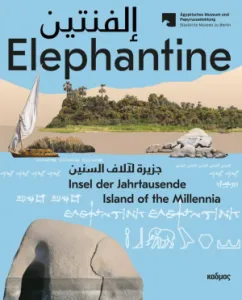
Verena Lepper (ed.): Elephantine. Island of the Millennia, 2024.
Elephantine is an island in the Nile in southern Egypt. This trading and frontier centre was home to a uniquely diverse population. Different languages, cultures and religions came together here. It is the only place in the world where it is possible to »read« the cultural history of 4,000 years through written sources. Thousands of texts are written on papyrus or ostraca in ten different languages and scripts, including hieroglyphics, Aramaic, Coptic and Arabic. In this first comprehensive presentation of its kind in the world, outstanding artefacts from Berlin will be shown alongside selected international highlights.
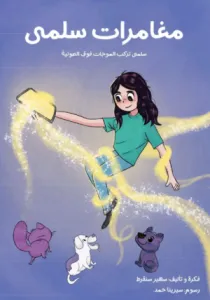
Suhair Sunoqrot and Sereena Hamad: Salma's Adventures: Salma Rides the Ultrasound Waves [in Arabic], 2024.
The Adventures of Salma is the first AGYA science comic for children. It is the result of an AGYA tandem project by Suhair Sunoqrot and Franziska Lissel, who want to inspire Arabic-speaking girls in particular to embrace STEM subjects. In the first issue titled 'Salma Rides Ultrasound Waves' Salma and her friend Yasmin learn about ultrasonic waves to solve a pressing problem: They develop an app that warns cell phone users when they get too close to an object, which helps them avoid collisions so that they can enjoy their social media life without interruption. The app ‘UltraSalma’ is a hit and has surprising consequences in real social life…
The illustrations were created by the up-and-coming Jordanian artist Sereena Hamad.
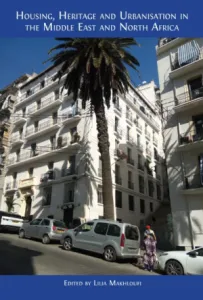
Lilia Makhloufi: Housing, Heritage and Urbanisation in the Middle East and North Africa, 2025.
This book explores the interconnection between housing, heritage and urbanisation. Bringing together architects, archaeologists, urban sociologists, urban designers, urban planners and landscape architects, this multi-authored and interdisciplinary volume presents diverse case studies from the Middle East and North Africa, shedding light on the past, present and future of residential spaces.
With its focus to traditional, modern and contemporary housing in Egypt, Iran, Morocco, Syria and Tunisia, Housing, Heritage and Urbanisation in the Middle East and North Africa explores the correlation between architecture, urban planning and society. The contributors critique the impact of rapid urbanisation and global architectural standardisation, which often goes beyond local identity. Instead, they advocate for a sustainable urban development rooted in community needs and cultural heritage.
Ultimately, this volume argues that successful urban planning must balance modernity with tradition, ensuring that housing reflects the lived experiences of its inhabitants. A crucial read for scholars and practitioners, it reaffirms that sustainable cities must be shaped by local needs, not just global trends.
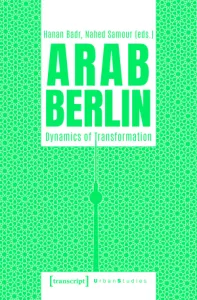
Hanan Badr, Nahed Samour (eds.): Arab Berlin: Dynamics of Transformation, 2023.
Berlin is increasingly emerging as a hub of Arab intellectual life in Europe. In this first study of Arab culture to zoom in on the thriving metropolis, the contributors shed light on the dynamics of transformation with Arabs as agents, subjects, and objects of change in the spheres of politics, society and history, gender, demographics and migration, media and culture, and education and research. The kaleidoscopic character of the collection, embracing academic articles, essays, interviews and photos, reflects critical encounters in Berlin. It brings together authors from inter- and multidisciplinary fields and backgrounds and invites the readers into a much-needed conversation on contemporary transformations.
Nuha Al-Shaar, Beate La Sala (eds.): Storytelling, Seafaring, and Travel Writing: The Arabian Gulf and the Indian Ocean, 2026.
Storytelling, Seafaring, and Travel Writing advances research on Islamic travel writing, with a particular concentration on the Arabian Gulf and Indian Ocean. Ranging from the late antiquity to the present, this collection explores how storytelling, travelogues, and seafaring narratives have contributed to cultural discourses and intellectual traditions. By examining Arab seafaring and travel from new angles and through cross-cultural and interdisciplinary lenses, these essays challenge conventional interpretation. Essential for scholars and researchers in Islamic studies, philosophy, literary analysis, and cultural history, it illustrates how real and imagined narratives have profoundly influenced cross-cultural exchanges and the construction of moral and cultural paradigms over time.