
Universal Art Group (UAG) / Verlag Müller & Schindler
Booth number: 5A05
universalartgroup.com
About us
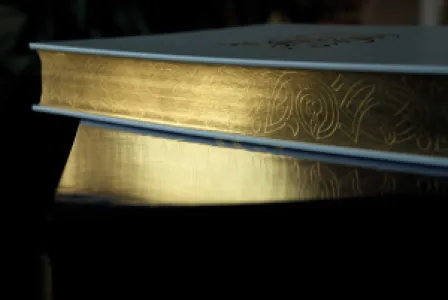
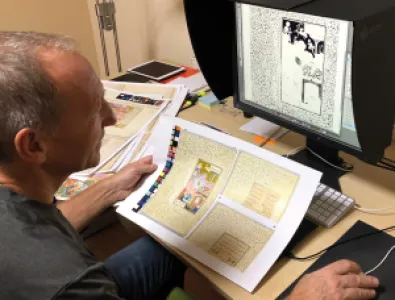
Universal Art Group (UAG) brings the world of art under one roof, combining tradition and innovation through master craftsmanship and state-of-the-art technologies. From the meticulous production of facsimiles and art books to bespoke merchandising, replicas, and digitisation using gigapixel technology, UAG supports museums and cultural institutions with expert publishing services, tailored projects, and international distribution.
Our mission is to preserve, curate, and disseminate art and cultural heritage across space and time. By fostering cross-cultural exchange, we make diverse artistic expressions accessible to audiences worldwide. Beyond publishing, UAG offers exhibition and content development services, creating bridges between institutions and the public.
With a multidisciplinary team devoted to excellence, UAG safeguards the legacy of the past while embracing modern innovation—ensuring that art continues to inspire, connect, and enrich future generations.
Because Culture Matters – Because Art Unites
Address
Innstrasse 7
84359 Simbach am Inn
Germany
E-mail: info@universalartgroup.com
Phone: +49 8571 926129
Internet: universalartgroup.com
Contact person:
Alexander Wilhelm
Vice President International Marketing & Business Development
E-mail: wilhelm@universalartgroup.com
Phone: +43 664 2242648
Products & Services
Tradition & Innovation: Craftmanship combined with state-of-the-art technology
Digitisation: Gigapixel technology
Expert Publishing Services: Tailored projects for your institution, and international distribution
Cross-Cultural Exchange: Disseminating art and cultural heritage
Facsimiles – Art Books – Merchandising – Replicas – Digitisation – Exhibition & Content Development
Masterpieces of Islamic Book Illumination
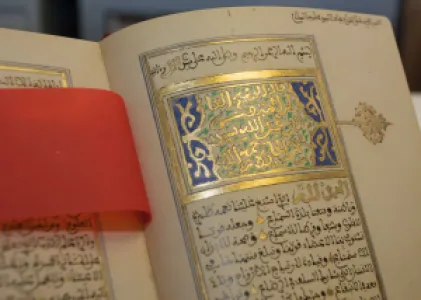
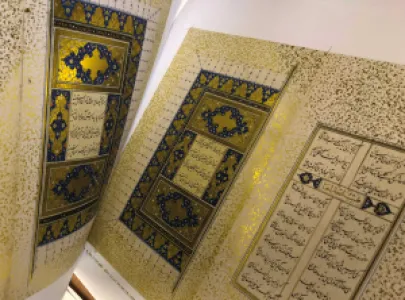
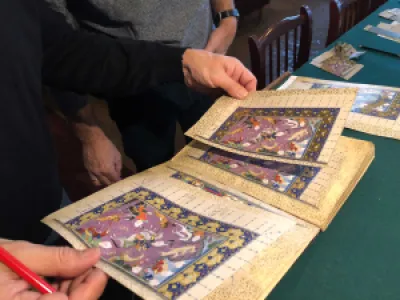
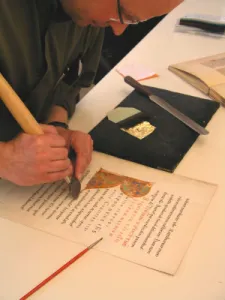
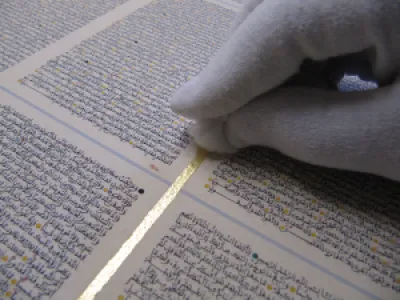
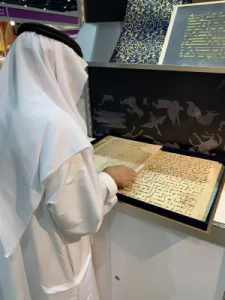
For many centuries, fabulous manuscripts have been created throughout the Islamic world. Now, for the first time ever, some of them are partially reproduced as true-to-the-original Fine Art Facsimile Leaves. They form a unique collection, illustrating the artistry of calligraphers and book illuminators from more than ten centuries and from different cultural backgrounds in the Islamic world. Each leaf is exactly reproduced in every aspect down to the smallest detail according to the original.


The Stars of Samarkand - Ulugh Beg’s Book of the Fixed Stars by Al-Sufi
The skies and their empirical observation have fascinated people worldwide – and this manuscript gives us a glimpse of fabled Samarkand, mythical center of the Silk Road in the 15th century and synonymous with oriental splendour under the Timurids. Ulugh Beg, a scientist on a ruler’s throne, had the famous 10th-century text of Al-Sufi calligraphed and painted as a magnificent manuscript for his library, depicting star constellations in 72 unique miniatures.
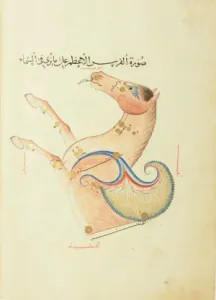
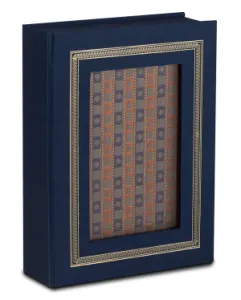
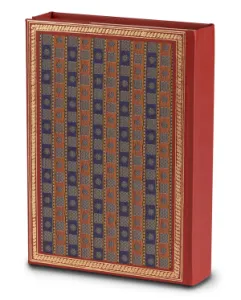
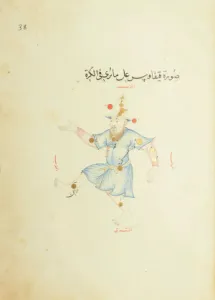
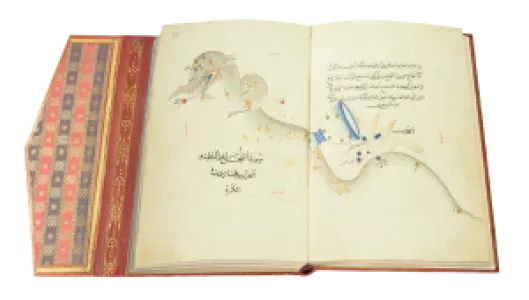
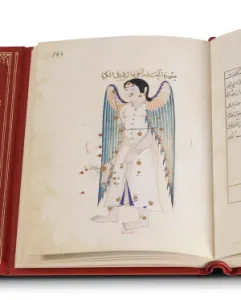
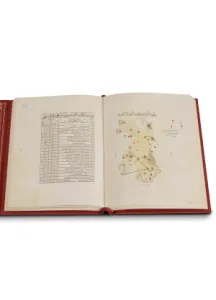
Fol. 136: Leo. Leo is a prominent constellation located between Cancer and Virgo, and easily recognisable in the spring sky. It has many bright stars and a distinctive shape that recalls a crouching lion. The mane and shoulders of the lion also form an asterism known as the „Sickle“, which may look like an inverted question mark to modern observers.
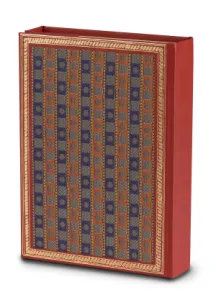
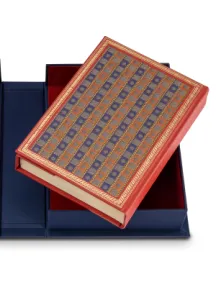
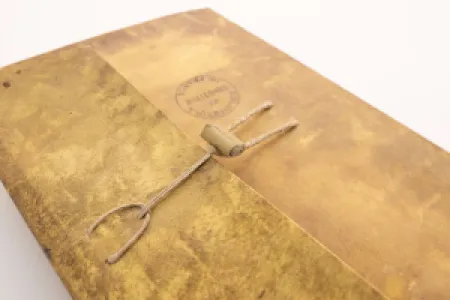
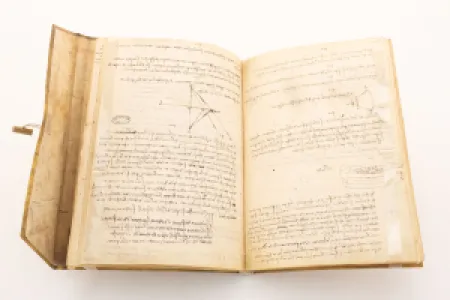
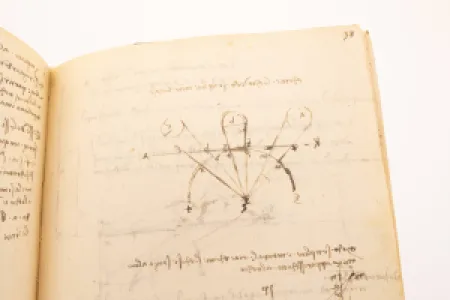
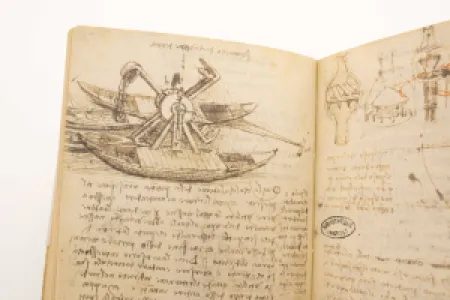
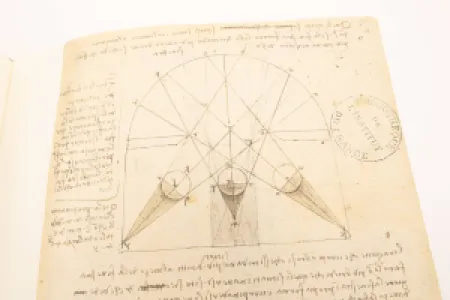
The Parisian Sketchbooks by Leonardo da Vinci - personal ideas of the great universal genius
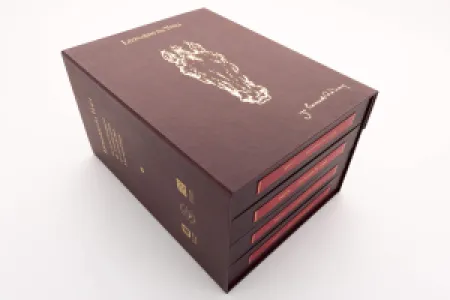
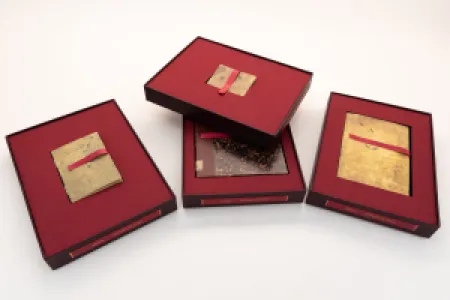
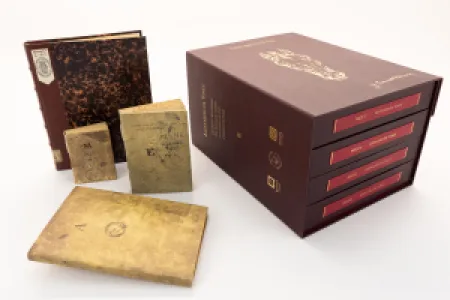
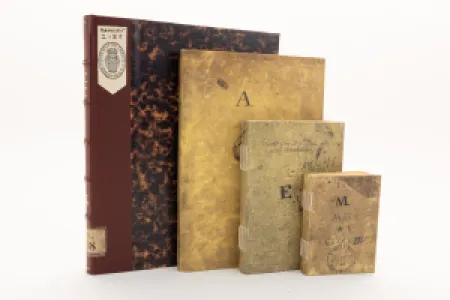
Step into the brilliant mind of Leonardo da Vinci: The 12 Paris Notebooks and their two supplement volumes from the Institut de France are now available as a meticulous facsimile edition – strictly limited to 990 copies worldwide. This monumental project is divided into four series, three of which have already been published.
Five-hundred years after the death of one the greatest geniuses of all times, our publishing house issues a unique testimony of Leonardo da Vinci’s creations and ideas which allows you to immerse in the thoughts of this great Renaissance Man.
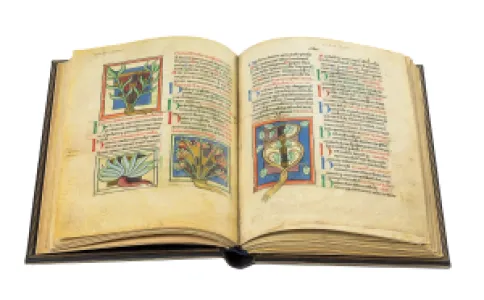
About Plants and Animals – A medical house book from the Middle Ages
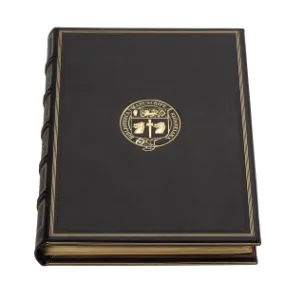
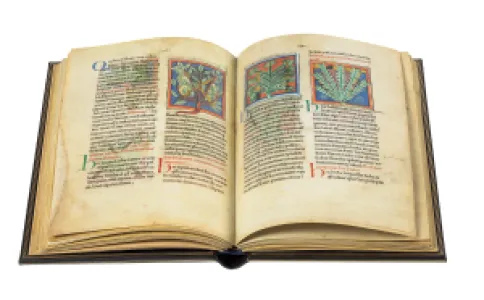
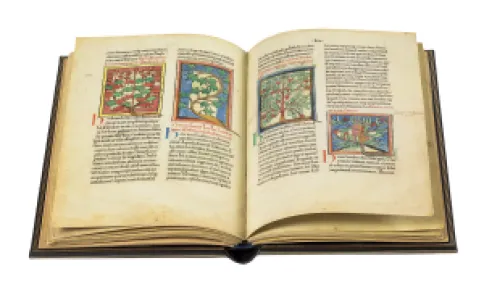
During the third quarter of the 12th century, unknown artists in Northern France or England created a fascinating manuscript: a medical house book, which is now published for the first time as a perfect and faithful facsimile edition, limited to 900 copies worldwide. The original is held under the signature Sloane MS 1975 in the British Library in London.
Our manuscript offers a unique testimony of its time, not only from the point of view of medicine, pharmacology and the history of science, but also with regard to the history of mentalities and history of art. More than 240 skilfully executed illustrations, which offer an exceptional insight into the knowledge of the era, display plants, animals and medical treatment methods, converting each image into a little work of art, full of colours and splendidly decorated with gold and silver. The strongly stylised illustrations of plants, some of them almost arabesque-like, are found on nearly every page of the compendium, and together with the wonderful depictions of animals make this manuscript a unique gem of medieval book art.

Codex Cocharelli
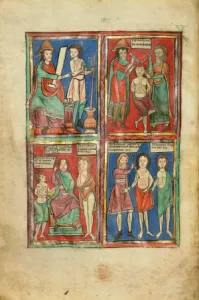
A famous Genoese merchant family has created a wonderful monument to itself in this little book. The manuscript is remarkable for its unique artistic quality and its content, which reflects the turbulent political and economic history of Europe. In times of Mongol and Islamic threats, fragile intra-European power structures, the end of the Crusader states and lively trade between Europe and the Far East along the Silk Road, the experiences of this Genoese merchant family exemplify the history of Europe and Italy at that time.
The Codex Cocharelli was written between 1325 and 1335 and is now preserved in six fragments scattered across the globe, which have now been reunited in this facsimile edition. The original parts of the manuscript are held at the British Library in London (MS Add. 27695, MS Add. 28441, MS Egerton 3127 and MS Egerton 3781), the Museo Nazionale del Bargello in Florence (MS inv. 2065 Carrand) and the Museum of Art in Cleveland (Wade Fund, MS n. 1953.152). The facsimile edition is strictly limited to only 1,000 copies worldwide.
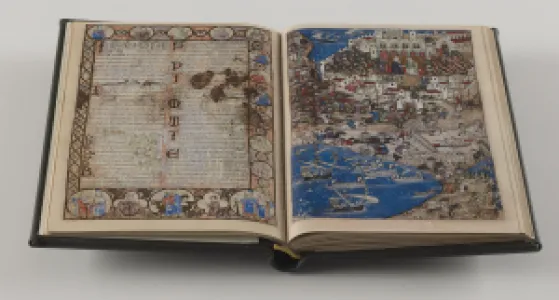
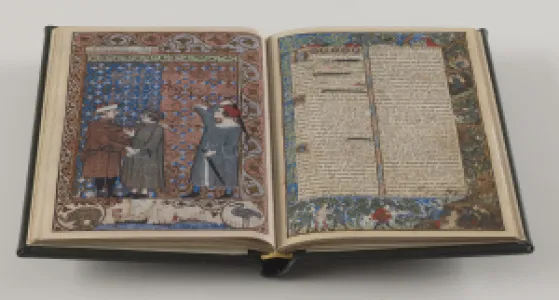
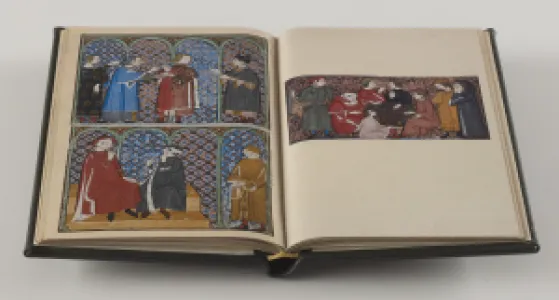
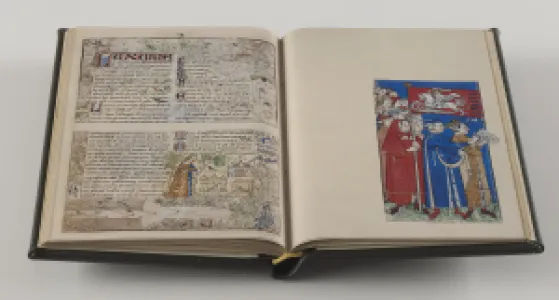
The frame text is a didactic text about vices and virtues, which aims to give the reader a deeper understanding through individual examples. The examples are mostly events from the time when the manuscript was written, making it a great source for history and politics, but also art and natural sciences.